
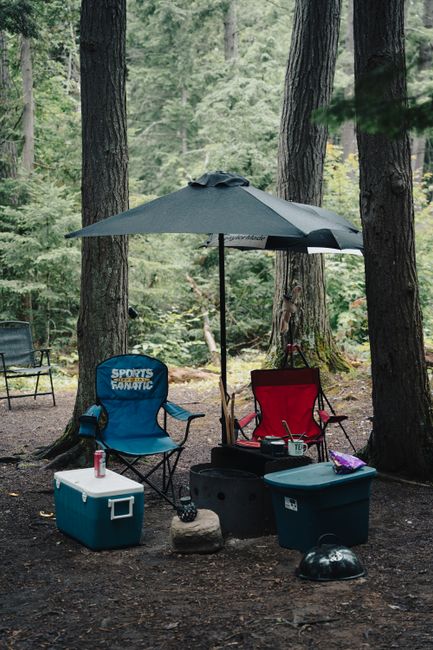
Packed car camping gear laid out on a picnic table including tent, sleeping bags, cooler, stove, and labeled bins at a forest campsite

Camping Packing List for Beginners: Essential Car Camping Checklist with Quantities

Discover a complete camping packing list for beginners that eliminates guesswork. Includes exact quantities, simple meal planning, and essential gear for your first car camping trip.

12 min read

Pack Once, Camp Confidently on Your First Trip

Starting camping is easier with a specific, practical list. This guide is designed for beginner-friendly car camping at established campgrounds with drive-up sites.

Many first-trip packing lists are too vague. Instructions like “Bring water” are not helpful when you are thirsty at night and the spigot is far away. This guide provides practical quantities and a streamlined approach: what you need, what you will actually use, and what can wait for later.

This list assumes trips of 1 to 3 nights, car camping, mild to cool weather, access to a picnic table and sometimes a fire ring, plus a campground water source. If your site lacks potable water, use the quantities below and bring extra containers.

  • Best suited for first-time car campers, couples, small groups, and families with older kids
  • Goal: one complete, reusable list you can adjust for future trips
  • Strategy: pack by systems (shelter, sleep, kitchen) instead of random items
“A good first-trip packing list is not longer. It is more specific.”
— CampMate field notes

How to Use This List

Copy the sections into a checklist and assign owners for each system (for example, one person manages the kitchen kit, another the shelter). In CampMate, save your finished list as a reusable template to speed up packing on future trips.

Before You Pack: 3 Key Decisions That Shape Your List

Make these three decisions first to avoid duplicate gear, missing essentials, and overpacking.

Spend five minutes deciding: (1) your expected low temperature at night, (2) how you will cook, and (3) your water management plan. These choices determine 80% of your gear list.

If camping with others, agree on shared items now, such as stove, cooler, water containers, and site gear like lights and trash bags.

  • Decision 1: Nighttime low temperature. Check the campground forecast, not the nearest city. Choose a sleeping bag rated about 10°F (6°C) below the expected low for comfort.
  • Decision 2: Cooking method. Option A: stove-only (fast and reliable). Option B: stove plus campfire (nice to have but do not rely on campfires).
  • Decision 3: Water plan. Will you fill containers at a campground spigot or bring all water from home? This determines container size and quantity.
“Plan the systems, then pack the items.”
— Campground host advice

Beginner Rule for Shared Gear

For items used by multiple people (cooler, stove, lantern), assign one owner and a backup plan. Avoid common mistakes like two stoves but no pot.

Shelter Basics: Tent, Stakes, Groundsheet, and Campsite Setup

A dry, stable shelter greatly improves comfort. Beginners should prioritize simple setup and weather resistance over extra space features.

For car camping, a freestanding tent is easiest to learn. Practice pitching it once at home to avoid confusion at dusk.

Common tent issues on first trips include missing stakes, no headlamp, or a wet groundsheet. This list helps you avoid those problems.

  • Tent: 1, sized for number of campers plus one for comfort (e.g., 2 people use a 3-person tent)
  • Rainfly: 1, confirm it’s packed with the tent
  • Footprint or groundsheet: 1 (tent-specific footprint or a trimmed tarp, not extending beyond tent floor)
  • Stakes: 1 full set plus 2 spares (important for rocky ground)
  • Guylines: 1 set (preferably pre-attached) plus 2 spare lines (8 to 12 ft / 2.5 to 3.5 m)
  • Mallet or stake hammer: 1 (a small rubber mallet works well for beginners)
  • Small tarp for site use: 1 (8x10 ft is versatile for shade or rain cover)
  • Paracord or utility line: 25 to 50 ft (7 to 15 m) for tarp rigging and clothesline
  • Clips or clothespins: 6 to 12 for drying towels
  • Compact broom and dustpan: 1 set (keeps tent clean and livable)
  • Ground mat for entry: 1 (helps keep grit out of the tent)
“Keeping the inside of the tent dry and grit-free ensures a good night’s sleep, even for beginners.”
— Weekend car camper

Fast, Clean Tent Setup Order

Lay groundsheet first, pitch tent body, insert poles, clip or attach, stake corners lightly, add rainfly, and tension guylines last. This keeps everything aligned and reduces re-staking.

Sleep System: Pad, Bag, Pillow, and Comfort Upgrades That Matter

Sleep quality makes a big difference between roughing it and enjoying camp. Insulate well underneath and choose a warm enough sleeping bag.

A sleeping pad is essential for car camping. Even in mild weather, the ground draws heat away. Select a pad that fits your body and insulates well; prioritize comfort over ultralight weight.

Keep your sleep gear packed together in one bin or duffel for easy access and to avoid forgetting anything.

  • Sleeping pad: 1 per person (inflatable or foam; aim for an R-value of 3 or higher for cool nights)
  • Sleeping bag: 1 per person (comfort rating about 10°F / 6°C below expected low)
  • Pillow: 1 per person (camp pillow or one in a compressible sack)
  • Sleep base layer: 1 set per person (clean, dry clothing reserved for sleeping)
  • Earplugs: 1 pair per person (optional but helpful especially at busy campgrounds)
  • Eye mask: 1 per person (optional, useful near bright sites)
  • Extra blanket or quilt: 1 per tent (optional, great for shoulder seasons)
  • Repair patch kit for pad: 1 (small and easy insurance)
  • Small battery lantern or tent light: 1 per tent (use a warm, low setting)
“Warm from underneath first, then add blankets as needed.”
— Gear shop fitter

Simple Upgrade That Feels Big

Bring an extra closed-cell foam pad or thin picnic blanket to place under your sleeping pad or in the tent vestibule. It protects your pad and adds extra comfort.

Camp Kitchen and Food: Cook Kit, Cooler Plan, Water, and Easy Meals

For beginners, keep the camp kitchen simple, repeatable, and easy to clean. This section includes exact quantities so you can shop and pack confidently.

Plan meals that use one pot and one pan with minimal chopping for your first trip. Focus on learning camp flow: setup, cooking, cleaning, and storing food properly.

Treat your cooler like a system with an ice plan, food organization, and a shaded spot. A disorganized cooler leads to soggy food and extra store trips.

  • Stove: 1 two-burner propane stove for 2 to 6 people or 1 single-burner stove for 1 to 2 people
  • Fuel: 1 x 16 oz propane canister for 1 to 2 nights (stove-only for 2 people); 2 canisters for 3 nights or groups of 3 to 6. Bring 1 extra canister if unsure.
  • Lighter plus backup matches: 1 each (store matches in a waterproof bag)
  • Cook pot with lid: 1 (2 to 4 liters is versatile)
  • Frying pan or skillet: 1
  • Spatula and stirring spoon: 1 each
  • Knife and small cutting board: 1 each (use a sheath or cover for safe packing)
  • Eating kit: 1 bowl or plate, 1 cup or mug, and 1 fork and spoon per person
  • Cooler: 1 (40 to 65 quarts for 2 to 4 people on a weekend is common)
  • Ice: 10 to 20 pounds (4.5 to 9 kg) for 2 nights depending on heat and cooler quality; use block ice plus cubes if possible
  • Water: 1 gallon (3.8 liters) per person per day for drinking, cooking, and basic cleanup; increase to 1.5 gallons (5.7 liters) in hot weather
  • Water containers: 1 jug of 5 to 7 gallons (19 to 26 liters) per group plus 1 bottle of 1 liter or more per person
  • Soap and cleanup: biodegradable soap (small bottle), sponge, scrubber, quick-dry towel, wash basin or tub, trash bags (2 to 4)
  • Food storage: 1 bear-resistant container if required or a sturdy latching bin, plus 6 to 12 zip bags for leftovers and organization
  • Coffee/tea: simple setup with instant coffee, tea bags, or a small press, plus sugar and creamer as desired
“The best first-trip menu is one you can cook and clean up easily in the dark.”
— Campground neighbor wisdom

Beginner Cooler Packing That Works

Pre-chill your cooler overnight if possible. Pack block ice on the bottom, then raw proteins sealed in bins or bags, dairy next, and drinks on top. Use a separate cooler for drinks if your group opens it frequently.

Clothing and Footwear: A Small Capsule That Works for Most Weather

Beginners tend to overpack clothing. Focus on a small capsule with one warm layer, one rain layer, and enough socks and base layers to stay comfortable.

Car camping allows extra clothing, but comfort depends on layers, not multiple outfits. Pack for morning and evening chill and expect one set of clothes might get smoky or dusty.

Choose quick-drying fabrics when possible. Cotton is fine around camp in dry weather but avoid relying on it for warmth if damp.

  • Base tops: 1 per day or 2 total for a weekend if re-wearing is okay
  • Base bottoms: 1 to 2 pairs (one can double as sleepwear if clean and dry)
  • Warm layer: 1 fleece or light insulated jacket per person
  • Wind/rain shell: 1 per person (a rain jacket is essential even with a good tent)
  • Pants: 1 durable pair plus 1 comfortable pair or shorts depending on season
  • Socks: 2 pairs per person for a 2-night trip; 3 to 4 pairs for 3 nights, including 1 warmer pair if nights are cool
  • Underwear: 1 per day plus 1 spare
  • Sleep socks: 1 pair per person (optional, useful on chilly nights)
  • Shoes: 1 primary pair (trail shoes or sneakers) plus 1 camp shoe (sandals or slip-ons)
  • Hat: 1 sun hat or cap; add 1 warm beanie if nights are cool
  • Gloves: 1 light pair if forecast is cool or you tend to get cold
“Dry socks are morale boosters.”
— Every experienced camper

Pack Clothing by Function, Not Outfit

Organize your clothing into three mini-stacks: (1) hiking and active wear, (2) camp cozy clothes, and (3) sleepwear. This prevents wearing your only warm layer all day and having nothing dry for night.

Toiletries and Campsite Hygiene: Simple Essentials

Keep hygiene minimal and practical. The goal is clean hands, basic comfort, and leaving the site tidy.

Most established campgrounds have bathrooms, but do not assume soap or toilet paper will be provided. A small hygiene kit prevents surprises.

Keep all toiletries in one waterproof bag for easy transport to and from the bathroom.

  • Toilet paper: 1 roll per group (even if bathrooms exist)
  • Hand soap: 1 small bottle or soap sheets
  • Hand sanitizer: 1 per person or 1 shared pump
  • Toothbrush and toothpaste: 1 set per person
  • Towel: 1 per person (quick-dry camp towel preferred)
  • Wet wipes: 1 pack (use sparingly and pack out used wipes)
  • Sunscreen: 1 bottle per group
  • Bug repellent: 1 bottle per group
  • Lip balm: 1 per person (optional but commonly used)
  • Medications: personal daily meds plus blister care items
  • Headlamp: 1 per person (essential for night trips to the bathroom)
  • Trash bags: 2 to 4 (for camp trash, recyclables, and spares)
“If you can wash your hands and keep trash contained, your campsite stays pleasant.”
— Longtime car camper

Keep the Picnic Table Usable

Bring a small tablecloth or wipeable cover. It makes food prep easier and keeps small items from falling through cracks.

FAQ: Beginner Camping Packing List Questions

Quick answers to common first-trip packing questions with practical numbers and priorities.

If you only remember one thing: prioritize sleep warmth, water, and light. Everything else is a bonus.

  • How much water should beginners bring? Plan for 1 gallon (3.8 liters) per person per day for drinking, cooking, and basic dishwashing. Increase to 1.5 gallons (5.7 liters) per person per day in hot weather or for more cooking. If potable water is available at the campground, bring less but keep at least 1 gallon per person at camp as a buffer.
  • How many propane canisters do I need for a weekend? For 2 people cooking on a stove for 1 to 2 nights, one 16 oz canister is usually enough. For 3 nights, colder weather, or groups of 3 to 6, bring 2 canisters. When in doubt, add one extra. Unused fuel is useful as backup for next trips.
  • What can I skip on my first car camping trip? Skip camp furniture beyond what you already own, specialized cookware sets, axes, extra lanterns, and most camp gadgets. If you have shelter, sleep gear, water, stove, light, and a simple cleanup kit, you’re set.
  • What should I buy first if building gear slowly? Buy in this order: (1) sleeping pad, (2) sleeping bag rated for your typical nights, (3) headlamp, (4) stove and one pot, (5) cooler or food storage solution. A comfortable sleep system improves every trip, even if other gear is borrowed.
  • How do we avoid duplicates when camping with friends? Assign owners by system: one person brings stove and fuel, another cooler and ice plan, another shelter items, and another the site kit (lantern, trash bags, table cover). Use a shared checklist in CampMate to track coverage before buying or packing duplicates.
“Your first trip is for learning your personal essentials, not perfecting your gear closet.”
— CampMate planning principle

The 'Actually Used' Extras List

If you want a few extras that earn their space, choose from camp chair (1 per person), a small tarp (1 per site), a warm blanket (1 per tent), a compact broom (1), and earplugs (1 pair per person). Save bigger upgrades for after your first trip.

Save This List as a Reusable Template for Faster Future Trips

After one successful trip, your packing list becomes a personal template to pack faster and forget less each time.

After your trip, spend two minutes reviewing what you used daily, what went untouched, and what you wished you had. This is how beginners quickly become efficient campers.

To simplify packing for every weekend, save this checklist as a template in CampMate. Duplicate it for each new trip and adjust quantities, food, and weather-related items. Packing becomes calmer when your list is ready.

  • Keep gear grouped by system (shelter bin, kitchen bin, sleep duffel)
  • Restock consumables immediately after the trip (fuel, wipes, trash bags)
  • Add notes next to items you want to upgrade later, not during pre-trip rush
“The best packing list is the one you can repeat.”
— CampMate community mantra

One-Bin Rule for Beginners

Try to fit kitchen and site essentials into one tote. If it does not fit, remove duplicates and single-use gadgets first. One bin is easier to load, unload, and keep organized.

Continue the journey

Turn This Into Your Repeatable Packing Template

Build this beginner list once, then reuse it for every car camping weekend. In CampMate, check items off, assign shared gear owners, and adjust quantities in seconds.

Related Articles

Continue exploring camping tips and packing guides